 Experience Works
Ashen Crucible
Wiki home · Nether and travel · Equipment
Status: naturally generated Nether dungeon. The captured, player-edited bank layout generates underground with a dry corridor to a connected natural cave. Neutral goblin guards witness theft, mining and attacks, cast spells, and call backup. Lower security fireplaces replenish guards until disabled. Mini ghasts and fire boars are not included.
Natural generation and security
- The lowest floor generates at Y 8–16; the four floor heights are relative offsets 0, 7, 14 and 21. The entrance checkpoint is 22 blocks above the lowest floor.
- Placement requires substantial surrounding rock and roof cover. Small enclosed cavities are filled by the template’s host shell; exposed lava-ocean sites are rejected. The corridor must reach dry natural cave space, with connected room beyond its mouth, rather than a sealed air pocket.
- The entrance corridor searches up to 24 blocks beyond the front host edge. The bank uses the saved user-edited template; it is not rebuilt using the old procedural layout.
- Structure placement cells are 24 chunks apart with 8-chunk separation. Terrain/cave requirements can reject a placement cell, so this is not a guaranteed distance between banks. New generation occurs in newly explored terrain.
- Natural lockboxes and the treasury receive world/position-seeded loot. Existing player inventories and edited review saves are not regenerated.
- 20 neutral goblins populate a complete loaded bank by default. They are half-size, have 20 health, and witness actions within 18 blocks when they can see the player. Creative/Spectator players and Peaceful difficulty do not trigger alarms.
- Witnessed container interaction, mining or attacking a guard triggers a 30-second alarm, nearby guard alerts and 3 backup goblins, with a 48-guard cap. Leaving the bank’s vicinity or waiting out the alarm stops pursuit unless another offence renews it.
- Goblins cast a magic bolt effect within 14 blocks, dealing 3 damage after a 10-tick wind-up, followed by a 60-tick cooldown.
- A functioning security portal is a three-flame-wide feature. Its centre periodically restores neutral patrols, or summons alarmed reinforcements. Default intervals from lowest to highest floor are 60/120/180/240 ticks. A player must be within 48 blocks. Break any of the three flames to disable that portal; other portals remain active.
- Nearby host netherrack gets 6 bonus Ancient Debris vein attempts, with 2 blocks per vein attempt, in addition to normal Nether generation. Actual yield depends on replaceable host blocks.
Placement and cave checks · Security events and limits · Portal spawning
Natural cave entrance screenshot
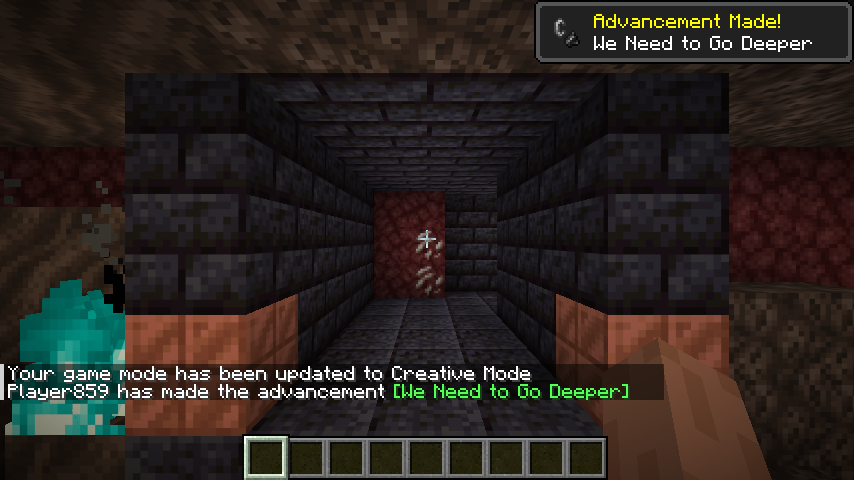
Actual generated Nether cave mouth, with the copper-trimmed entrance corridor leading around a bend into the bank. Night Vision was used for this inspection.
Original architecture review world
Open Ashen Crucible - Architecture Review in the development client's Singleplayer world list. The review starts at the secure upper entrance, in Creative flight so the whole chamber can be inspected and edited. The build is in the Nether, with its lowest floor at Y 8 and roof at Y 40. If needed, use:
/execute in minecraft:the_nether run tp @s 0.5 30 -24.5
Use F5 or Creative flight for different views. Walk on the pressure plates to open the iron checkpoint/vault doors. Right-click vault chests or the Gold Treasury to inspect their contents. The checkpoint doors use pressure plates; guard alarms and security portals provide the active security.
Current loot balance
Ordinary vaults draw capped, bank-appropriate selections from Minecraft’s Bastion Other, Stronghold Library and End City Treasure loot tables. The treasury additionally samples Bastion Treasure. Filtering retains bullion, nuggets, quartz, gems, books/paper, smithing templates, rare records/banner patterns, and treasury-only debris/scrap; food, arrows, building-block stacks and unrelated equipment are excluded. Vanilla book enchantments are retained.
Regular vaults target 3–5 bank stacks on the upper two floors, or 3–6 on the lower two; an occasional extra Emblazoned reward can add one slot. Deeper floors have 3% / 7% / 15% / 25% chances of that extra reward, from top to bottom. These are usually 1–2 Shards; the lower two floors can rarely substitute one Ingot. No full equipment sets are guaranteed.
The treasury targets 9–12 bank stacks plus its two small Emblazoned stacks and optional equipment; item uniqueness can reduce the final count. Ordinary currency stacks are capped at six items, treasury currency at eight; gems at two/three and rare debris/scrap/templates at one. The current edited review contains at most six occupied slots per ordinary container and twelve in the treasury, rather than full chests. Loot is seeded per world and container position.
The retouch kept all 31 containers, 54 door halves and 132 non-facade stair blocks. It replaced 169 structural gold blocks and varied 3,819 exposed brick surfaces. The original user-edited save was backed up before applying the four changed Nether region files. Player data, entities and other dimensions were retained.
Bank loot selection · Surface-only decoration pass · Captured player-edited structure
Current material palette
A second, broader palette pass gives each material a distinct architectural role:
- Red Nether Bricks form broad wall infill panels; darker Nether Bricks form upper transitions and ceiling panels.
- Smooth Basalt provides lighter floor tiles and ceiling lattice. Floor tiles alternate with Polished Blackstone in large three-block squares, retaining chiseled motifs and copper inlays.
- Polished Basalt defines vertical framing. Rough Blackstone provides a darker lower wall course, with the existing blackstone arches, stairs and railings retained.
- Copper fittings, ember plaques and green security-fire features remain as accents.
This pass does not reroll loot or change the room layout. It verified 722 existing door/stair/rail blocks and all 31 inventories unchanged. Only the four Nether region files were replaced; original player data, entities and other dimensions were kept. A fresh backup was taken before the pass.
Architectural palette implementation
Finding the dungeon
The Goblin Dungeon Compass points to the nearest registered Nether entrance. New prototype builds register automatically; the existing review world registers when its treasury and nearby green-fire fireplaces load. The compass also searches natural generation candidates and resolves the actual entrance height instead of Minecraft’s coarse Y=0 structure marker.
Layout
- One enormous open chamber, 37 blocks across by 35 deep internally, with four vault levels at Y 8, 15, 22 and 29.
- Twenty-four original side vaults, expanded with player-placed containers: the current edited review has 31 loot containers total. Doors, stairs and the player’s layout are preserved.
- Paired three-block-wide staircases connect every floor; railings, landings and ceiling clearance are built explicitly.
- An iron-bar checkpoint at the upper entrance and a larger gated treasury at the bottom.
- A three-block-wide Gold Treasury, with a real 54-slot inventory containing a much smaller mixed bank cache. It guarantees 3–6 Emblazoned Ingots and 3–6 Shards, with a 35% chance of one equipment piece. This is a static model for now; its lid does not animate.
- Four lower-level green-fire security portals. Their fire does not burn entities or spread; intact portals can replenish bank guards.
- Bank Goblin guards: neutral Piglin-derived mobs at 0.5 scale, with original olive/charcoal/gold texture and Blaze Rod staffs. They patrol when neutral, and respond to witnessed offences with spells and backup. The original review used twelve actors; natural banks populate twenty by default.
Most structural gold is now waxed cut copper, while the main chest retains its gold appearance. Exposed brick faces have clustered cracked-brick, polished-blackstone and raw-blackstone variation. The formerly blank entrance wall has basalt pilasters, copper collars, recessed rune/lamp bays and stepped stone cornices.
Lighting is provided by actual lava channels, warm lanterns, soul chandeliers, grille lights, green flames and ember rune panels. Screenshots use the game's renderer; they are not generated concept art. The solid netherrack host prevents existing caves or lava from cutting into the prototype.
Acquisition and configuration
The old architecture review save remains separate and is not overwritten. Dungeon blocks have no survival recipes; they generate in banks or can be obtained with /give for editing:
/give @s experience_works:crucible_gold_treasury
/give @s experience_works:crucible_security_fire
/give @s experience_works:crucible_ember_panel
/summon experience_works:bank_goblin
The nether module includes the bank content and the ashen_crucible, crucible_security and crucible_bonus_debris feature switches. feature.ashen_crucible_prototype controls the old review builder. crucible.* tuning keys control patrols, combat, generation heights, corridor length and bonus debris. The captured player-edited NBT template remains authoritative.
Implementation
Reproducible structure builder · Prototype registration · Treasury inventory · Goblin patrol actor
Natural reward containers now use personal dungeon loot, preserving a separate remaining inventory for each player.
Current in-game gallery
Player-supplied screenshots, 23 November 2026. These replace the earlier decoration/prototype views.
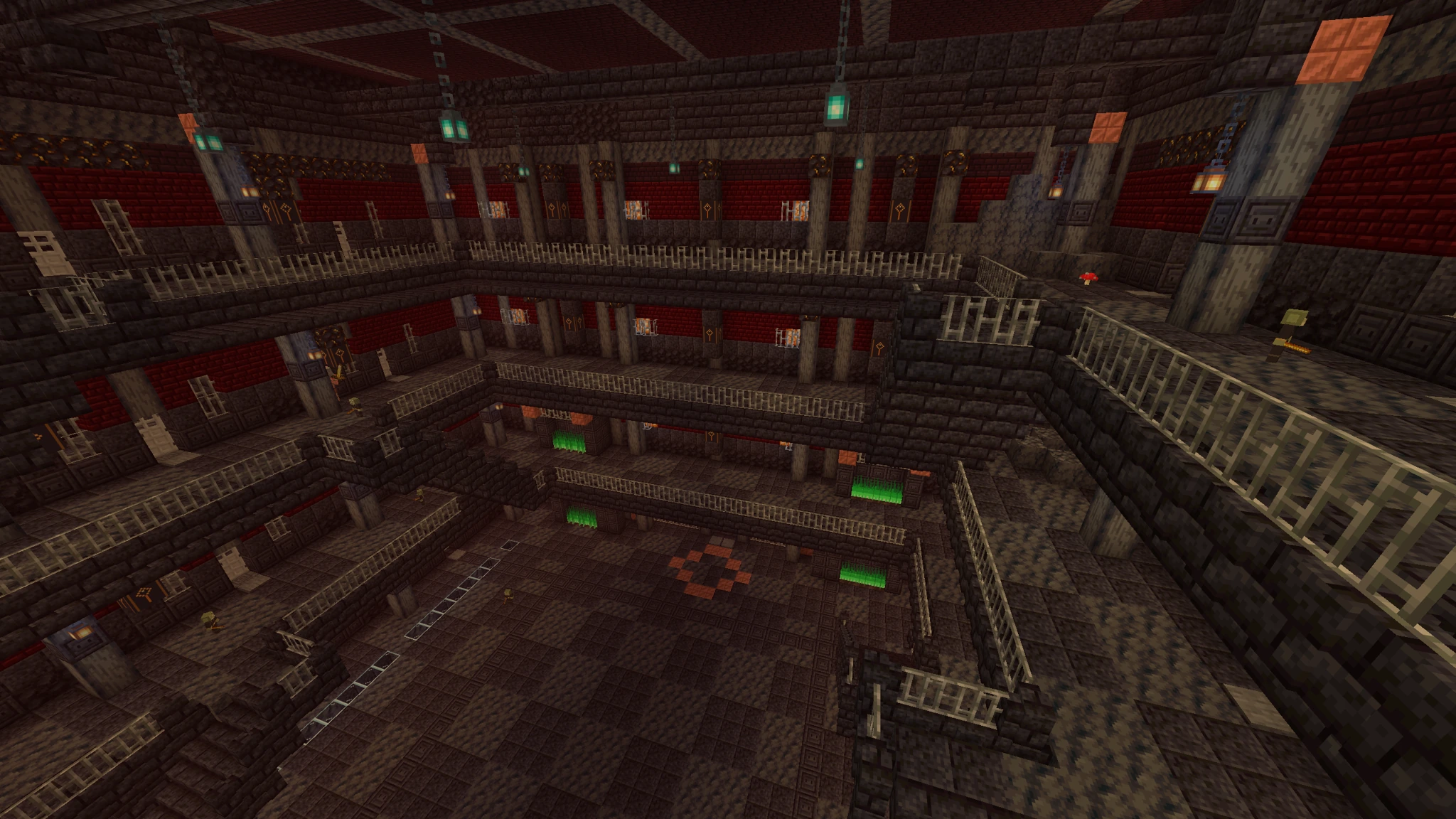
The open chamber and its stacked vault levels.
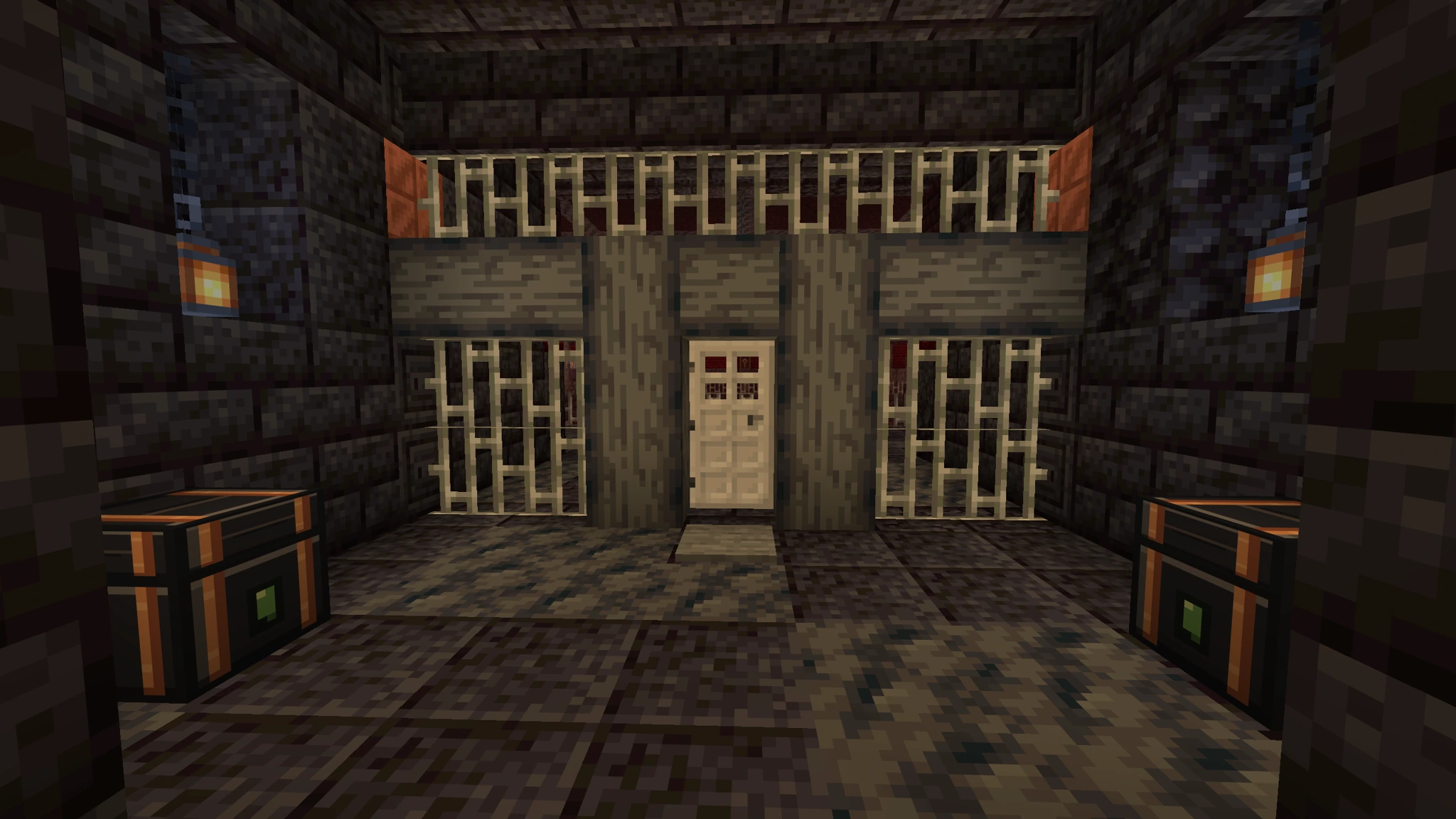
The guarded checkpoint, with the current copper-trimmed Goblin Vault Lockboxes.
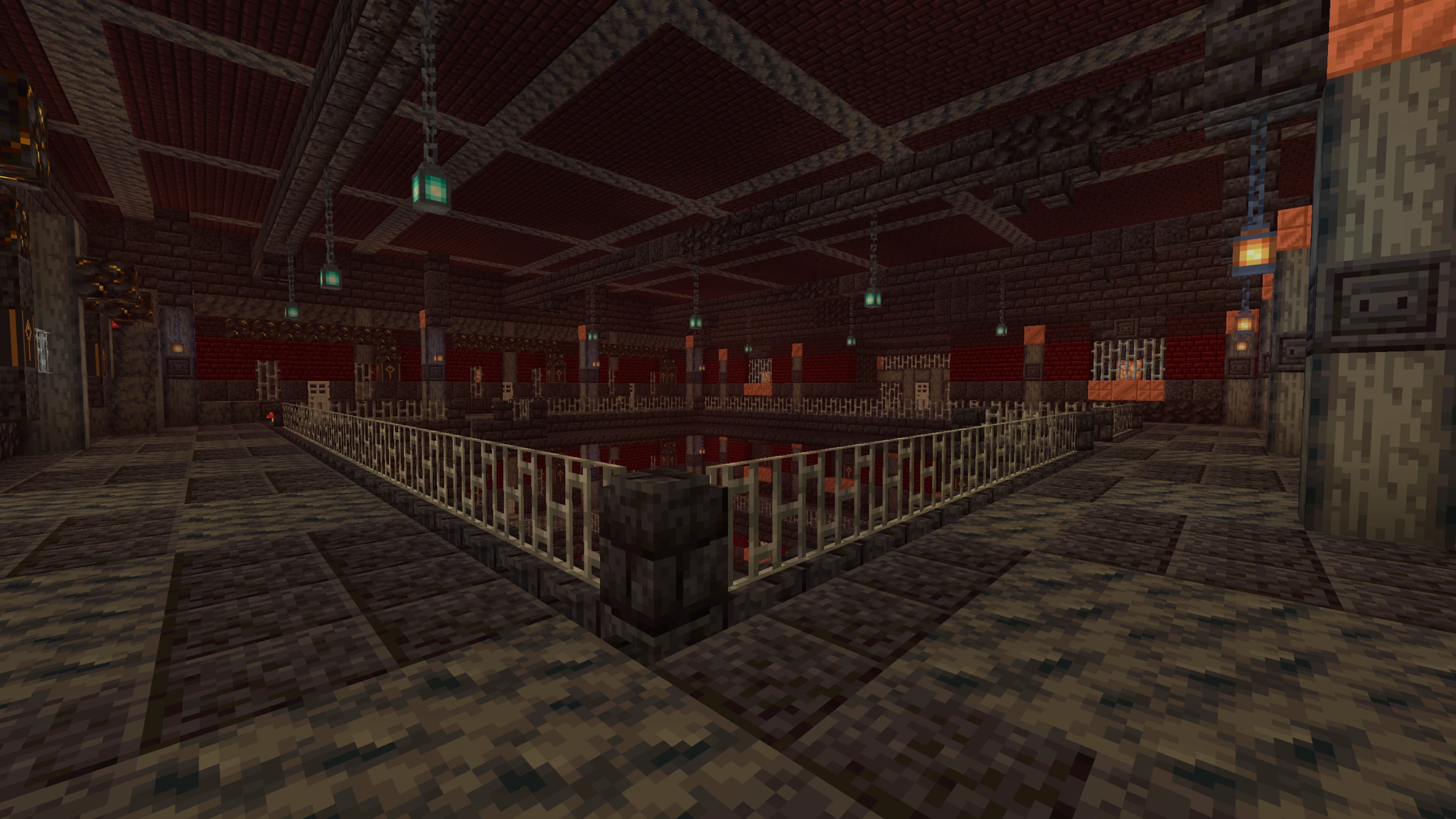
The lantern-lit upper walkways and security doors.
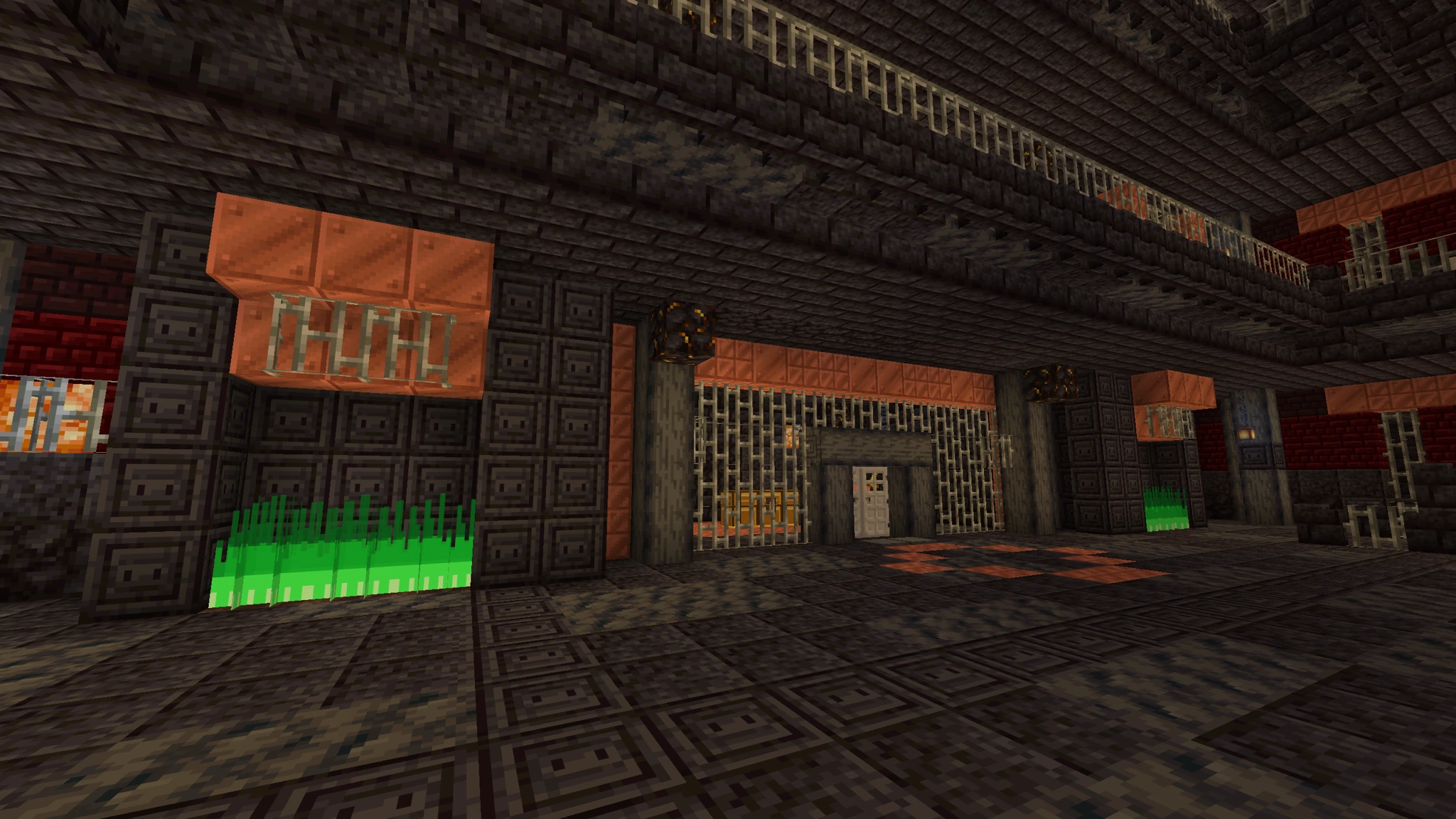
The lower treasury entrance and its green security flames.
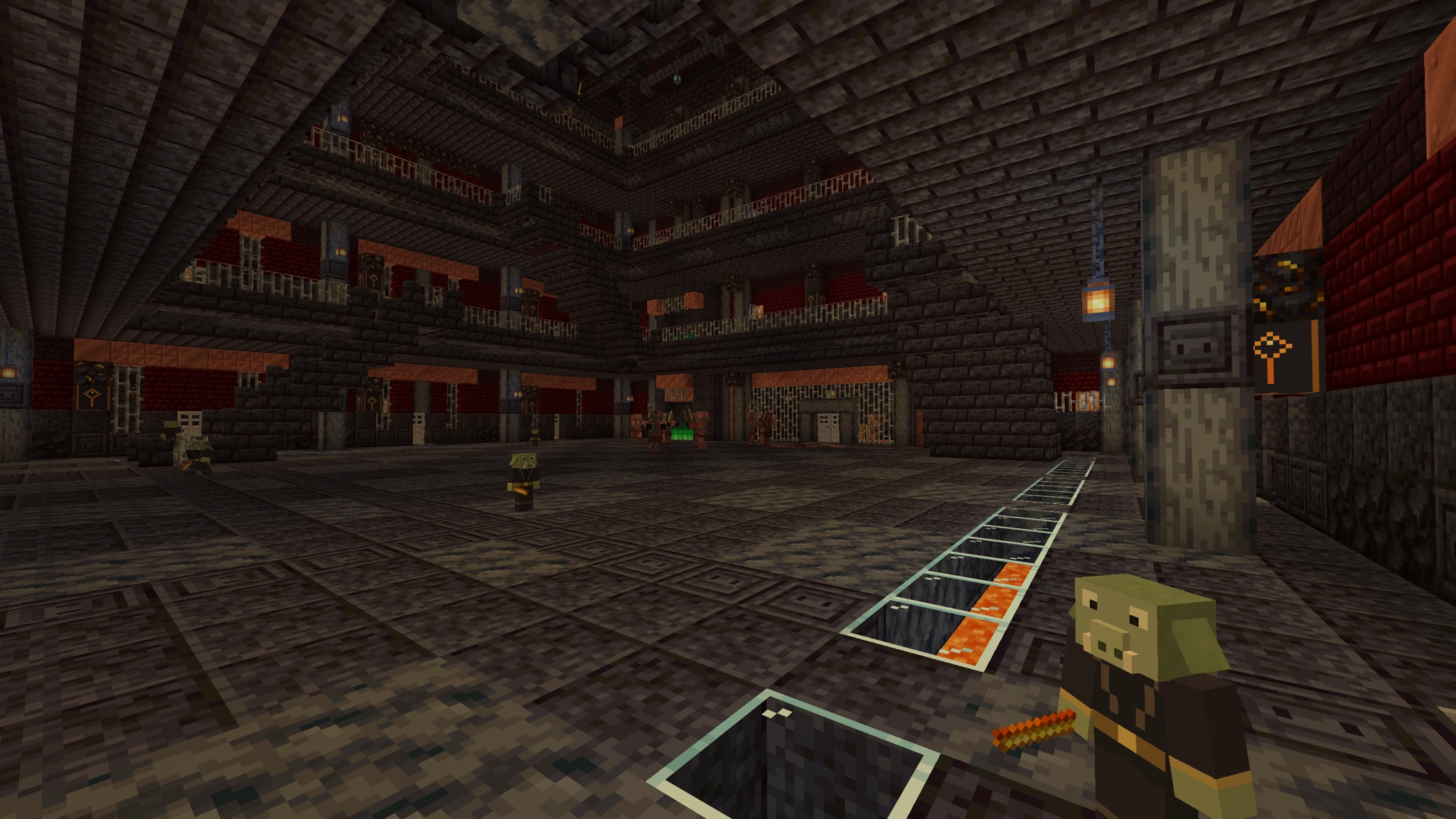
Bank Goblins patrol the lowest floor beneath the vault balconies.
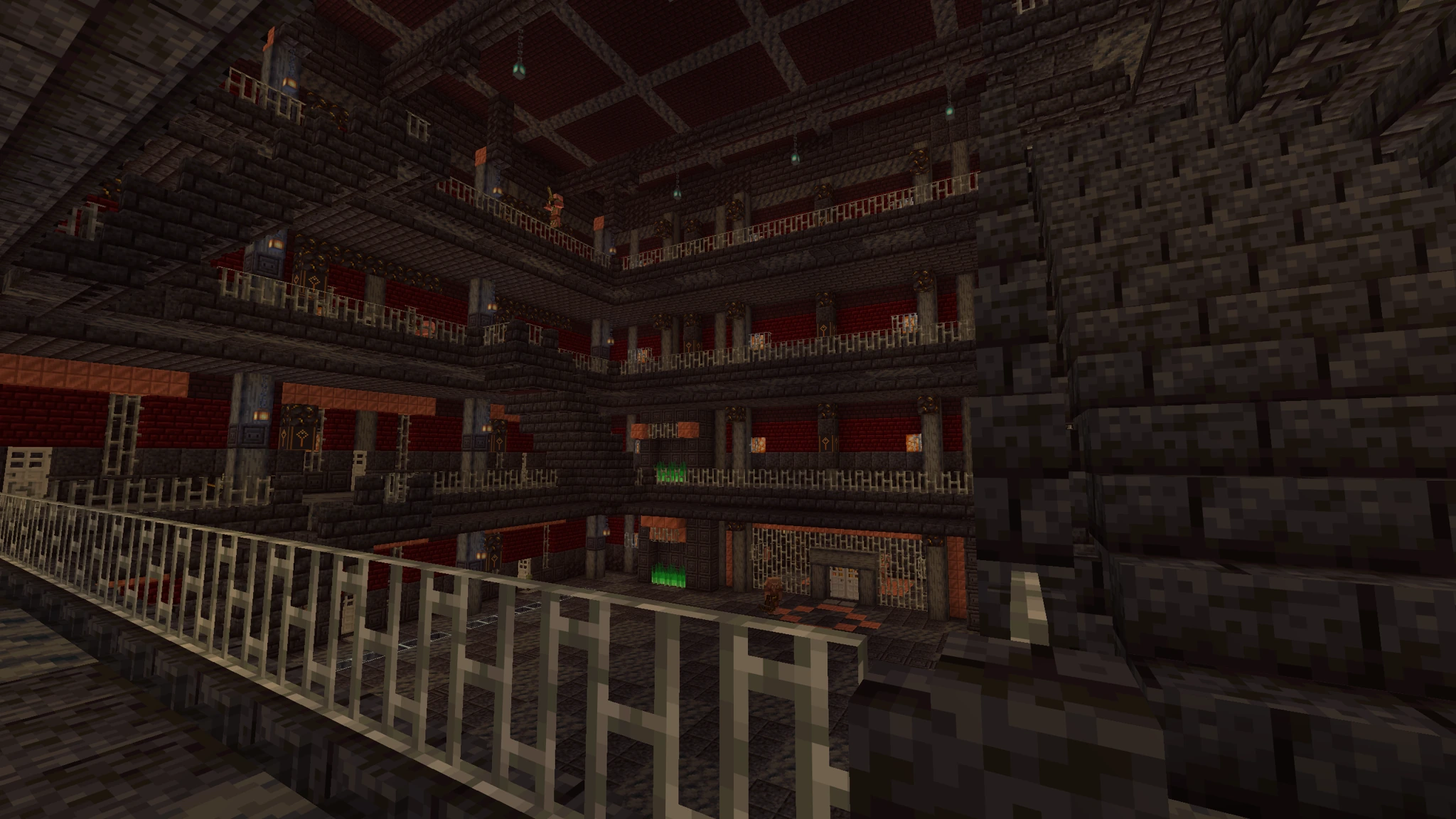
A view across the chamber showing the vault floors.